Break Up With Sunsilk
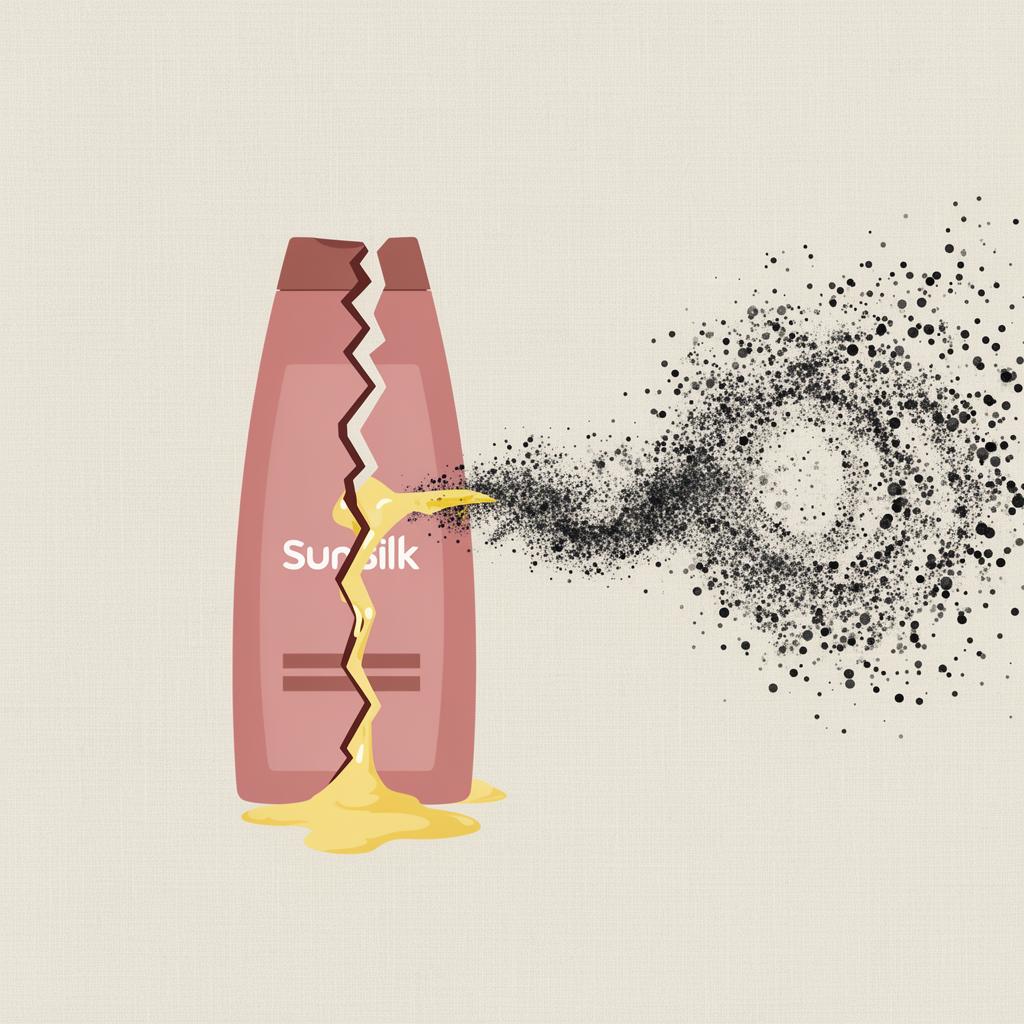
Sunsilk sells "expert hair" to women in the global south using the same surfactant base, same silicone film, and same fragrance black box as every other Unilever shampoo. Here is what the bottle actually does.
Sunsilk is one of the biggest haircare brands you have probably never bought — unless you grew up in India, Indonesia, Brazil, the Middle East or any of the dozens of markets where Unilever positions it as the affordable, aspirational option. Co-created by celebrity stylists. Endorsed by influencers. Priced for a teenager's pocket money.
It is also, ingredient-for-ingredient, one of the harshest mainstream shampoos still on shelf.
The whole formula is built around a problem the formula itself creates.
What is actually in the bottle
A standard Sunsilk shampoo leads with sodium laureth sulfate (SLES) — a strong anionic surfactant that strips the scalp's sebum aggressively. To compensate for the dryness this creates, the formula then layers on dimethicone and other silicones, which coat the hair shaft in a synthetic film that feels like softness but is in fact buildup.
Then comes the fragrance load. "Parfum" on a Sunsilk label is the same legal black box as on Axe or Dove — a protected blend that can include synthetic musks, phthalate fixatives, and a long list of allergens disclosed only above certain thresholds. The fragrance is the product's actual selling point in many markets; the smell is what the customer remembers, not the wash.
The "expert" story
Sunsilk built its modern positioning on celebrity stylist co-creation: a different stylist for each "hair concern" — frizz, damage, oily roots, hair fall. The science behind those formulations is almost identical between variants. The differentiator is fragrance, colour, and the face on the bottle.
The co-creator branding sells the illusion of personalisation on top of a single base formula.
This is not unique to Sunsilk. It is how mass haircare works. But Sunsilk does it with the largest reach into markets where consumer protection rules around fragrance disclosure are weaker than in the EU or US.
The dependency loop
SLES + silicone is a closed loop. The sulfate strips, the silicone coats, the coating builds up, the user shampoos more often to feel "clean", the sulfate strips harder, and the scalp ramps up oil production to compensate. The result is the exact problem the bottle promises to solve: oily roots, dry ends, hair that feels great in the shower and looks heavy by day two.
A sulfate-free, silicone-free wash breaks the loop in about ten to fourteen days. Most people describe a brief adjustment week — slightly waxy roots — followed by hair that holds a wash for three to four days without intervention.
The bigger pattern
Sunsilk is the haircare wing of the same Unilever portfolio that includes Dove, Axe, Vaseline, TRESemmé and Suave. The shampoos share more formula DNA than the marketing implies. Once you can read a back-of-bottle ingredient list, the brand on the front matters less and less.
What "switching" actually looks like
A solid shampoo bar removes the bottle, the water weight, and most of the preservative load in one move. The good ones use coco-glucoside or decyl glucoside as the surfactant — plant-derived, mild, fully biodegradable — and a small list of plant oils for conditioning. One bar replaces two to three plastic bottles and travels through any airport without a liquids bag.
For longer or curlier hair, a separate conditioner bar or a small bottle of a true silicone-free conditioner finishes the job.
The goal is not zero-waste perfection. The goal is to stop paying Unilever to strip your scalp.
The swaps below are listed as coming soon in the Codex shop. Pick one, give it two weeks, and notice what your hair does when nothing is fighting it.
- Potency
- Weak. SLES, dimethicone film, fragrance. Nothing in the formula is doing what the claims imply.
- Bioavailability
- Weak. The 'pro-keratin' marketing has no clinical support at this dose — the silicone is what makes hair feel softer for 24 hours.
- Marketing vs hype vs reality
- Poor. 'Expert hair' framing translated into 40 languages around the same base formula.
- Sustainability
- Weak. PET bottles, palm-oil-derived surfactants, fragrance black box, Unilever supply chain.
- Ethics
- Weak. Skin-tone targeting in some markets, hair-shaming creative in others, and a parent company with a long microplastics ledger.
- Verdict
- A surfactant-and-silicone shampoo with a global-south marketing budget.