Product Reviews.
What's actually worth buying, what's marketing theatre, and what you should break up with. No sponsorships. No affiliate spin. Just the receipts.
Worth it
21 reviewsProse vs Function of Beauty: Which Personalized Hair Quiz Actually Works?
Two of the biggest personalized hair brands, side by side. We put Function of Beauty and Prose through the quiz, the bottle, and the price — and decode what "personalized" really means in 2026.
Read the review
Google Nest Hub (2nd Gen): a smart display that does sleep tracking as a side quest
The Soli radar in the Nest Hub is the most surprising sleep tracker on this list — and the data is genuinely usable. Just don't buy the smart display for the sleep tracking alone.
Read the review
Whoop 4.0: the screenless coach that bills you forever
Whoop's strain-and-recovery model is genuinely useful — but the subscription model and screen-free design are not for everyone. Worth it if you'll actually train to the score.
Read the review
Eight Sleep Pod 4: a EUR 2,500 way to fix something a window can fix
The temperature science is real. The price, lock-in, and software subscription are extreme. Worth it for a narrow band of buyers who genuinely can't cool their bedroom.
Read the review
Apple Watch Series 10: the best general-purpose watch is finally a real sleep tracker
Sleep tracking on the Series 10 is finally good, and the sleep apnea detection is genuinely useful. But the ecosystem lock-in and the daily charging are the real story.
Read the review
Samsung Galaxy Watch 6 Classic: the Android answer that nearly gets there
Strong hardware, mature sleep tracking, and the only spinning bezel left in smartwatches. Still hamstrung by Samsung Health's quirks and a battery that doesn't quite last the night plus the day.
Read the review
Muse S Athena: the only consumer EEG that actually changed our meditation practice
A fabric headband with four EEG sensors that gives real-time audio feedback on your brain state. Niche, slightly clinical, and surprisingly transformative if you'll commit to a daily practice.
Read the review
Polar Vantage V3: the athlete's watch with the underrated sleep model
Polar's Nightly Recharge metric is one of the most useful overnight recovery numbers in the category, and the Vantage V3 hardware is finally a match for it.
Read the review
Garmin Venu 3: the wellness watch from a company that used to make boat GPSs
Garmin's best wellness-tilted watch, with the longest battery on this list and the most credible training data. The Connect app feels older than the hardware deserves.
Read the review
Withings Sleep Analyzer: the under-mattress pad that quietly outperforms most watches
A pressure-and-vibration pad that slides under your mattress and tracks sleep, heart rate, snoring and apnea events — no charging, no wearable, nothing on your body. The most painless sleep tracker on the market.
Read the review
Oura Ring Gen 4: the wearable that actually changes behaviour
A titanium smart ring that quietly tracks sleep, HRV, temperature and recovery without the nag-anxiety of a watch. Validated within consumer-device tolerances. The subscription is the only annoyance.
Read the review
Loop Earplugs: the best EUR 25 you can spend on your nervous system
Reusable silicone earplugs that take the cortisol-driving sharpness off the world without silencing it. The simplest product on this list, and one of the most effective.
Read the review
Ritual: an honest multivitamin with one expensive missing assumption
Transparent capsules, traceable ingredients, no proprietary blends, and a fishy aftertaste from the algal omega. Worth it with caveats — and what to know before you subscribe.
Read the review
Seed DS-01: the most over-engineered probiotic on the market, and it might be worth it
A two-capsule, twenty-four-strain probiotic with an outer shell that survives stomach acid and a price tag that hurts. Worth it with caveats — and what to eat instead if you're not in the market for premium capsules.
Read the review
Manuka Doctor Honey review: when wellness honey is actually worth the price
Real Manuka honey is a genuine antimicrobial — but most of what is sold as "Manuka" in supermarkets is glorified table honey with a green sticker. Here is how to read the label, why MGO matters, and the one budget option that beats the £40 jars.
Read the review
David Protein Bar review: the macros are real, the philosophy is not
28g of protein, 150 calories, zero sugar, designed by Peter Attia. The macros are genuinely impressive. But the marketing — "the body is just a protein deficiency away from greatness" — is the kind of optimisation gospel that quietly wrecks your relationship with food.
Read the review
Hair-fall supplements: 90% are biotin theatre. Here's the 10% that work.
Nutrafol, Viviscal, Sugarbear, Olly — most are biotin-padded multivitamins sold at a luxury markup. The real fix is usually iron, sometimes minoxidil, almost never a gummy.
Read the review
Psyllium husk: the cheapest, most boring supplement that actually works
No marketing, no nervous-system theatre — just one ingredient that quietly fixes most people's gut, cholesterol and blood sugar for about €0.15 a serving.
Read the review
SuperTeeth Prebiotic Mineral Toothpaste: the upgrade you didn't know your mouth needed
Hydroxyapatite instead of fluoride, prebiotics for your oral microbiome, and a tube that doesn't squeeze out a glob of synthetic foam. We were sceptical. We're converted.
Read the review
Pure Encapsulations Magnesium Glycinate: the boring supplement that actually works
No glow-up packaging, no founder story, no proprietary blend. Just clean magnesium glycinate at a real dose — and probably the single most cost-effective sleep upgrade we've tested.
Read the review
Nordic Naturals Ultimate Omega: the omega-3 we actually finish the bottle of
Third-party tested, no fishy burps, and a real EPA/DHA dose without the "wellness" markup. If you're going to take fish oil, take one that's worth taking.
Read the reviewSkip it
Products that don't deliver on the promise — and what to buy instead.

NextSense Earbuds: clever EEG-in-your-ears tech that isn't quite ready
In-ear EEG is a genuinely interesting idea and NextSense has the most credible execution. But limited availability, early-stage software and a science-project feel make this a wait-and-see.
Read the receipts
Vital Proteins Collagen Peptides: the best-selling collagen powder, not the best one
The Jennifer Aniston-fronted, Nestle-owned, supermarket-shelf collagen powder. 20g hydrolysed bovine collagen per scoop — a real dose. The hair-skin-nails promise is what to take with caution.
Read the receipts
Beam Dream: a nice cocoa with a sub-clinical sleep dose
A cocoa-based sleep powder with 3mg melatonin, low-dose L-theanine and magnesium, sold on celebrity testimonials and a EUR 60/month subscription default. The ritual is the active. The powder is the wrapper.
Read the receipts
Athletic Greens travel packs: the same expensive powder, more expensively
The same formula as the canister, repackaged into single-use foil sachets at a 20 percent per-gram markup. Convenience framing that lets the brand charge a travel premium on a daily product.
Read the receipts
MUD\WTR: a coffee swap that costs three times the coffee
A mushroom-cacao morning drink that costs three times what coffee does, contains a seventh of the caffeine, and gives you a habit-stack instead of a hit. Skip the daily, keep the ritual.
Read the receipts
Liquid I.V.: a sugar packet with a medical-sounding name
A "hydration multiplier" that is 11g of sugar per serving and the same electrolyte profile as a pinch of salt. Skip it — and what to drink instead.
Read the receipts
Hims & Hers: telehealth done at scale, with the telehealth tradeoffs
A subscription that compresses "go see a doctor" into a five-minute quiz. The drugs are real. The clinical care is thin. Skip the default funnel — and what to do instead.
Read the receipts
Magic Spoon: a better cereal than Lucky Charms, still ultraprocessed
High-protein, low-sugar cereal that actually tastes like the childhood thing — but built on allulose, milk protein isolate, and tapioca starch. Worth it with caveats, and only as a sometimes-food.
Read the receipts
Huel: meal replacement that mostly delivers, with caveats
An honestly-formulated nutritionally-complete powder that earns its place — but should not be every meal, every day.
Read the receipts
Olipop: prebiotic soda or just clever sugar?
Better than Coca-Cola. Not the gut hero the Instagram ads claim. A useful step-down drink with caveats.
Read the receipts
Liquid Death: skull cans, supermarket water, premium markup
A heavy-metal aesthetic wrapped around boring mountain water. Hydration is real. The €2.50 mark-up is marketing.
Read the receipts
AG1: a €99/month multivitamin in a very expensive pouch
It's not a scam. It's also not magic. You're paying podcast-ad money for a perfectly fine greens powder that does roughly what a €20 multi does.
Read the receipts
LMNT Recharge: the electrolyte that finally tastes like something you'd drink
Sugar-free, sodium-heavy, and the only stick pack we've found that actually fixes the 3pm crash without leaving a chalky aftertaste. Here's when it's worth it, when it isn't, and how we'd use it.
Read the receiptsBreak up with
The brands gaslighting you, and the clean swaps worth switching to.

Goop wellness drops: a luxury-priced shrug
Gwyneth's wellness empire monetised the placebo effect at $90 a bottle. The ingredients are unremarkable. The branding is the entire product. Skip — and what to use instead.
Read the receipts
Cymbiotika: liposomal delivery, luxury pricing, and a thin evidence base
Silver foil pouches of liposomal vitamin C and glutathione at $80 a month per SKU. The delivery system is real. The clinical case for most people isn't. Skip — and what to take instead.
Read the receipts
Function of Beauty: the customisation quiz is the product, not the shampoo
A direct-to-consumer brand that turned a personality quiz into a billion-dollar haircare empire. The bottles are pretty. The ingredient list isn't. Skip it — and what to use instead.
Read the receipts
Prime Hydration: the Logan Paul drink kids carry like a status symbol
A neon sports drink marketed to children, lawsuit-grade caffeine in the energy line, and a hydration claim that doesn't survive its own ingredient list. Skip it — and what to drink instead.
Read the receipts
Recess CBD Seltzer review: the prettiest can in your fridge does almost nothing
$3 a can for 10mg of broad-spectrum CBD and "adaptogens" measured in milligrams that would not move a mouse. We took apart the dosing maths and the marketing — and what you should actually drink when your nervous system is asking for help.
Read the receipts
Bloom Nutrition Greens: TikTok-famous, lab-thin, sugar-bright
A flavoured pink-green powder that sold itself with dance videos. The label tells a less viral story. Skip.
Read the receipts
Erewhon $20 smoothies: status drink, vending-machine inputs
A celebrity-collab smoothie that costs more than most lunches and uses ingredients you can buy for €4. The vibe is the product.
Read the receipts
Gruns kids gummies: a multivitamin shaped like candy
Pretty pouches, parent-friendly TikTok, and a fibre claim that does not survive a label read. Skip.
Read the receipts
Collagen creamers: pretty pouch, hydrolysed waste of money
They taste nice in coffee. They will not plump your skin, fix your joints, or do the things the label heavily implies. Here's the actual collagen evidence — and the cheaper way to get it.
Read the receipts
Neuro headbands: the €500 placebo with great Instagram lighting
Apollo, Sensate, Muse, Pulsetto — the at-home "vagus nerve stimulators" cost more than therapy and do less than a 4-7-8 breath. Here's what the actual data says.
Read the receipts
NAD+ IV drips: €800 for a placebo with a needle
The longevity clinic's favourite upsell. The molecule is real. The IV route is mostly theatre, and the people selling it know it.
Read the receipts
Break Up With Axe
Axe sells teenage boys a body spray made of synthetic musks, phthalate-suspected fragrance, and a propellant cloud you can taste. There is a reason your bathroom smells like a chemistry lab.
Read the receipts
Break Up With Dove
Dove sells you "Real Beauty" while pumping microplastics, synthetic fragrance, and palm-oil deforestation into your bathroom. Here is the receipts version — and the clean swaps worth switching to.
Read the receipts
Break Up With Vaseline
Vaseline is petroleum jelly. The clue is in the name. Here is what that actually means for your skin, your hormones, and the industry it props up — and what to put in the jar instead.
Read the receipts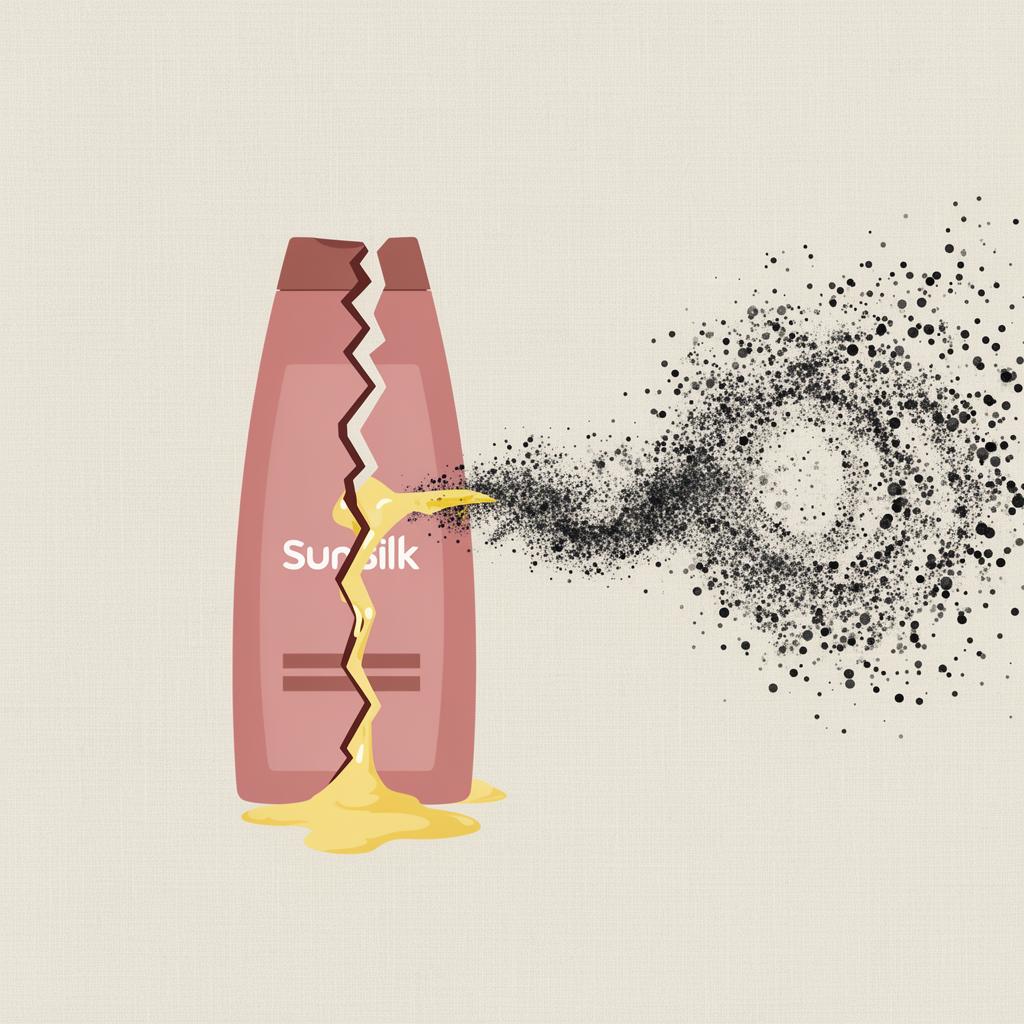
Break Up With Sunsilk
Sunsilk sells "expert hair" to women in the global south using the same surfactant base, same silicone film, and same fragrance black box as every other Unilever shampoo. Here is what the bottle actually does.
Read the receipts