We spent the better part of a year wearing, sleeping on, and arguing about the sleep tech that everybody seems to be buying right now. Some of it is genuinely useful. A lot of it is jewellery for anxiety. This is the honest roundup — ten devices, what they actually do at 3am, and who should bother.
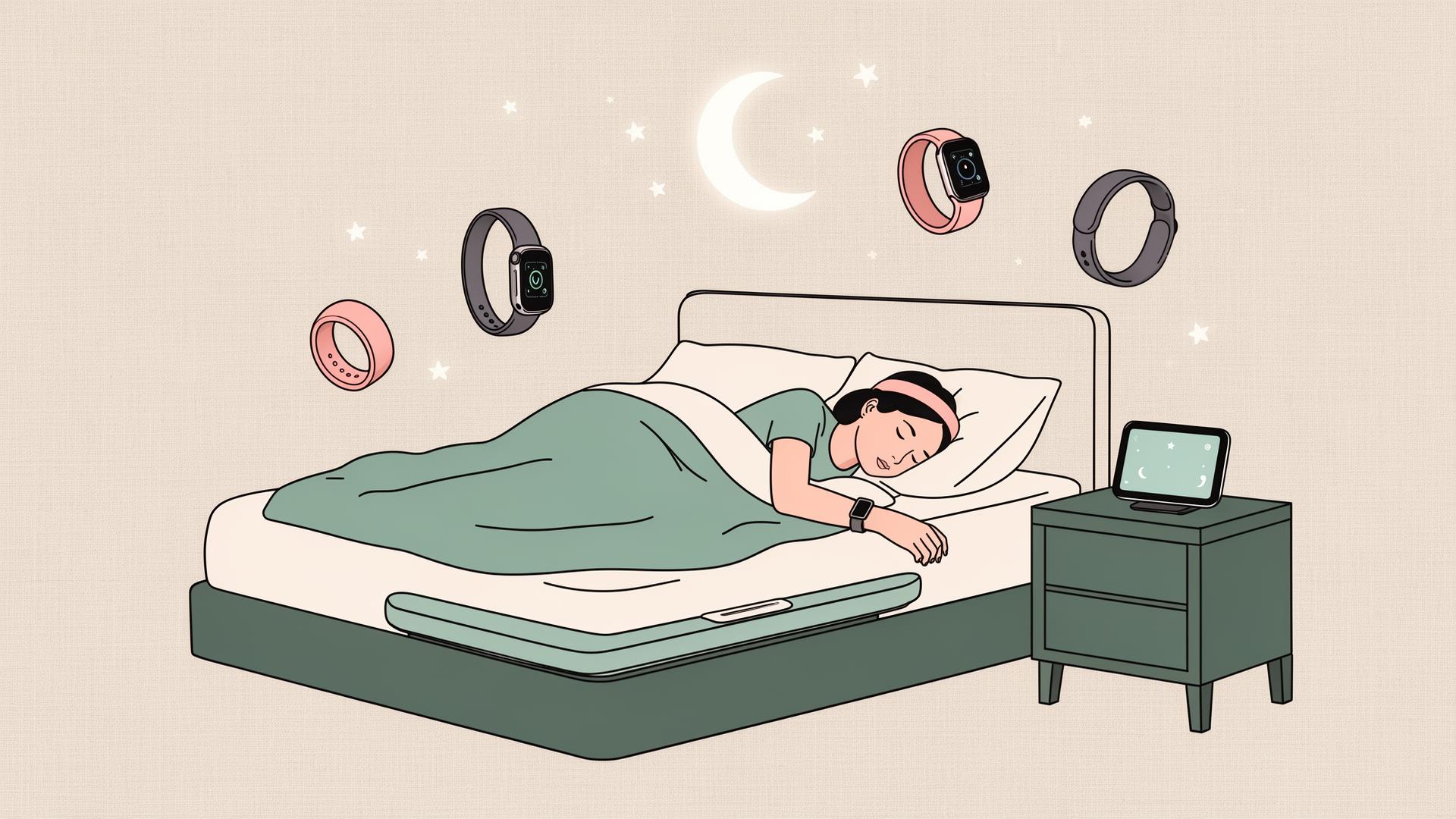
Sleep tech has moved past step counters and pretty graphs. The 2026 generation tracks brain activity, regulates mattress temperature in real time, flags suspected apnoea before your GP does, and quietly listens to your breathing from a nightstand. The category is finally interesting. It is also more expensive and more confusing than ever.
We grouped the ten devices into four jobs to be done: data you wear, data you sleep on, data without a wearable, and brain-level data. If you only read the verdicts, skip to the bottom.
The best sleep tracker is the one you forget you are wearing. Most people overestimate how much friction they will tolerate at bedtime.
Wearables that earn their place
The Whoop 4.0 is still the gold standard for athletes and high performers who actually act on recovery data. It is screenless, charges on the wrist, and the strain–recovery loop is the most behaviour-changing feature in any of these devices. The catch is the subscription: you do not own the band, you rent the data. If you stop paying, the hardware becomes a fabric bracelet.
The Apple Watch Series 10 is the device most people should buy if they already live in Apple's world. Sleep stages, HRV, sleep apnoea notifications, and a thinner case that is finally comfortable to wear overnight. It is not the deepest sleep tracker on this list, but it is the one you will actually keep on for a year. That matters more than 2% extra accuracy.
The Samsung Galaxy Watch 6 Classic matches Apple's feature set for Android users and adds the rotating bezel, which is still the best smartwatch input ever made. Snore detection requires a Galaxy phone nearby, which is a Samsung-tax we did not love.
The Garmin Venu 3 is the dark horse. Detailed sleep coaching, nap detection, HRV status and Body Battery — and it lasts a week between charges, which means you can actually wear it to bed without choosing between sleep data and a charged watch the next morning.
The Polar Vantage V3 is the pick for endurance athletes. Sleep Plus Stages and Nightly Recharge are genuinely useful, the ECG is a nice extra, and Polar's recovery model is more conservative than Garmin's — which we trust more after a hard week.
If a tracker tells you that you slept badly and you feel fine, listen to your body. The wearable is wrong more often than the human.
Sleeping on the data
The Eight Sleep Pod 4 is the only product on this list that we would call life-changing for the right person. It actively heats and cools each side of the bed, tracks your sleep, and adjusts overnight without you doing anything. If you are a hot sleeper, share a bed with someone who runs cold, or live somewhere with no air conditioning, it is worth the money. If you sleep fine already, it absolutely is not. The subscription is the real cost — the mattress cover is the foot in the door.
The Withings Sleep Analyzer is the quiet hero of the category. It slides under your mattress, costs a fraction of the Pod, and detects sleep stages, snoring and — critically — suspected sleep apnoea, with a CE mark behind that claim. For anyone whose partner has been told to "get checked out", this is the cheapest, least intrusive way to gather a week of real data before you book the clinic.
No wearable, no mattress pad
The Google Nest Hub (2nd Gen) uses Soli radar to track sleep contactlessly from the nightstand. The data is rougher than a wearable, but the friction is zero — you do not have to remember to charge it, wear it, or wash it. For people who hate wearables but want a directional read on their sleep, it is the most underrated device on this list.
Brain-level data, for the curious
The Muse S Athena (Gen 2) Headband is for the meditation crowd who want EEG and fNIRS feedback during practice and sleep. It is genuinely useful for meditators. As a pure sleep tracker, it is overkill and the headband-on-the-pillow setup is not for everyone.
The NextSense Earbuds are the most interesting product on this list and the one almost nobody will buy. In-ear EEG, research-grade, invite-only. Worth watching — when this technology gets cheap and small, every other tracker on this page becomes a toy. We are not there yet.
Brain-level data is the future of consumer sleep tech. Wrist data is the present. Most of us should stay in the present for now.
So what should you actually buy?
If you already wear a smartwatch, keep wearing it and stop reading reviews. The marginal accuracy gain from switching is not worth the friction.
If you do not wear a watch and never will, buy the Withings Sleep Analyzer. It is the highest-leverage £130 you can spend on understanding your sleep.
If you have the budget and you genuinely run hot, the Eight Sleep Pod 4 is the only sleep tech we have tested that produces a noticeable, repeatable change in how rested people feel.
If you are an athlete who acts on data, Whoop or Garmin Venu 3 — pick Whoop if you want coaching, Garmin if you want to own the hardware.
Everything else on this list is good. None of it is essential. Sleep tech is at its best when it nudges you toward earlier bedtimes, less alcohol, and cooler bedrooms. The fanciest device in the world cannot beat a boring evening routine — and the best ones on this list are the ones that quietly help you build that routine instead of replacing it.
We will be publishing full standalone reviews of each of these ten devices over the coming weeks as part of the Sleep Tech 2026 series. Subscribe to the newsletter if you want them in your inbox the day they go live.