The soft glow of the charging stand is the first and last thing many of us see each day. It’s the altar upon which we place our rings, our watches, our biometric patches — the digital familiars that promise to translate the messy business of being alive into neat charts and actionable insights. For years, this has been the accepted path to self-improvement: more data, more tracking, more optimisation. A life lived by the numbers.
But a subtle shift is underway. A quiet fatigue is setting in. The dashboard, once a source of empowerment, is starting to feel like another boss. This week, we’re observing the first tremors of a post-quantification world. It’s a world that is less about counting every step and sleep cycle, and more about the quality of the experience itself. Wellness, it seems, is finally growing up, moving from a numbers game to a nuanced conversation about what it truly means to feel good.
What's happening
Three distinct signals have emerged this week that point towards this new direction. First, there's a growing, albeit quiet, rebellion against the tyranny of the sleep score. Online forums and private coaching sessions are filled with individuals confessing to 'naked sleeping' – that is, sleeping without any tracking devices. They report feeling less anxious and more in tune with their body's actual signals of rest and fatigue. This isn't a Luddite revolution, but a conscious uncoupling from a metric that has, for many, become a source of stress rather than a solution.
Second, the concept of the 'gym' is being redefined. In cities like Berlin and Los Angeles, we’re seeing the first 'emotional fitness' studios gain traction. These are spaces dedicated not to building muscle, but to exercising emotional range through guided group sessions. Think less clinical therapy, more facilitated catharsis and communal resilience-building. They are a direct response to a world saturated with digital isolation, offering a physical space for connection and shared experience.
Finally, the CPG space is undergoing its own hyper-evolution. The generic 'green powder' of the early 2020s is being replaced by a far more specific proposition: genomic gastronomy. Start-ups are emerging that promise to tailor nutritional supplements, hydration mixes, and even meal plans not just to your preferences, but to your unique genetic makeup. It’s the ultimate expression of personalisation, moving beyond taste to the very code of your being.
Why it matters now
This isn't just a collection of disparate trends; it’s a cohesive response to where the wellness industry has brought us. The Global Wellness Institute (GWI) projected the market would approach an $8 trillion valuation by 2026, but that growth has been fueled by a model of relentless individualism and data accumulation. The cracks are showing. Consumers are exhausted by the pressure to constantly monitor and optimise every facet of their existence. This fatigue is creating a powerful demand for solutions that offer genuine connection, expert curation, and meaningful results over raw data.
The pandemic accelerated our reliance on digital tools but also starved us of genuine human connection. The current shifts are a correction, a rebalancing of the scales. We’re moving from the 'Quantified Self' to the 'Qualified Self', where subjective feeling, community support, and professional expertise are valued just as highly, if not more so, than a line on a graph. This new phase of wellness is about integrating technology more thoughtfully, using it as a tool to enhance, not replace, human intuition and connection.
We traded the tyranny of the inbox for the tyranny of the dashboard, and now the quiet rebellion has begun.
The Edit
The landscape is complex, but certain movements and ideas are charting the course. Here’s what we’re watching.
The Un-quantified Self
The paradox of modern wearables is that they can make us feel worse. A 'poor' sleep score can create anxiety that leads to another bad night's sleep, a cycle known as orthosomnia. The 'Un-quantified Self' movement is a conscious step back. It’s not about throwing away technology, but about changing our relationship with it. It’s about using data as a periodic check-in, rather than a constant performance review. This has given rise to a new skill among wellness professionals: data interpretation. The most sought-after coaches are now those who can take a client's biometric data, contextualise it with their lived experience, and create a plan that relies on feeling and intuition as much as on numbers. They're translators, turning a stream of data into a single, coherent story. The focus is shifting from what the data says to what it means for you.
Group State: The Rise of Emotional Fitness Studios
If you walked into Echoroom, a new studio in a minimally-branded London basement, you might not know what to make of it. There’s no squat rack, no treadmill. The space is circular, soft, and acoustically engineered. Here, a 'workout' involves guided vocalisation, somatic shaking, and group breathwork sessions designed to release stored tension. It’s one of several new 'emotional fitness' studios gaining a following. These are not therapy groups. They are facilitated spaces for people to process the ambient stress of modern life in a communal setting. The programming is designed to build emotional resilience and regulation skills. Studios are finding that there's a huge market for wellness that addresses the nervous system directly. They're using platforms like Codex's [/talent] board to find a new breed of facilitator — part yoga teacher, part somatic therapist, part group dynamics coach — to lead these sessions.
Genomic Gastronomy: Your DNA in a Bottle
For years, 'personalisation' in nutrition meant choosing between whey and casein protein. Now, it means sequencing your genome to determine your optimal micronutrient intake. Brands like the newly-launched Gene-U-M are at the forefront of this. The process is simple: you provide a saliva sample, and a few weeks later, you receive a detailed report and a subscription for daily powder sachets formulated for your specific genetic predispositions related to caffeine metabolism, vitamin absorption, and inflammatory response. The promise is alluring: no more guesswork, just scientifically-backed fuel. Of course, it opens a Pandora's box of questions about data privacy, efficacy, and the risk of creating a new form of dietary anxiety. But it represents the pinnacle of the personalisation trend, for better or worse.
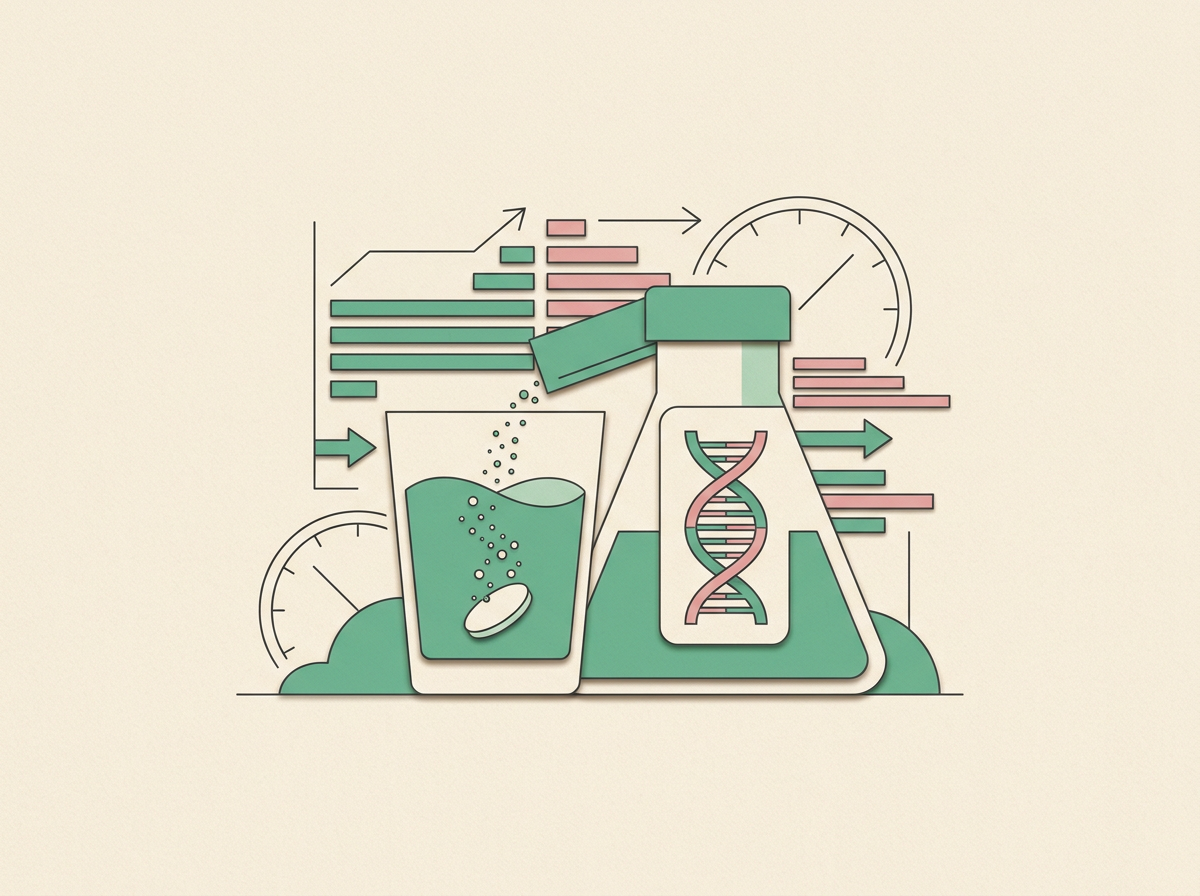
a minimalist photo of a water glass with powder dissolving, next to a sleek, lab-like box with DNA helix logo
The AI Sommelier: Training Gets Hyper-Personal
AI in fitness is moving beyond simple rep counting. New platforms are acting as real-time training partners, what some are calling an 'AI Sommelier' for movement. Imagine a system that uses your phone's camera to analyse your squat form, but instead of just saying 'go lower', it cross-references your movement patterns with your wearable's heart rate variability data. It might notice subtle signs of fatigue and suggest reducing the weight or switching to a less taxing accessory exercise. Platforms like Kinetik AI are integrating with smart equipment to make micro-adjustments to resistance or stability mid-set. This isn't about replacing human coaches. It's about giving them, and you, better tools. The best results come from a verified human coach using this technology to design and monitor a program, providing the crucial layer of strategy, motivation, and accountability that AI can't yet replicate.
Personalisation used to mean getting your initials on a gym bag. Now it means your genome sequencing your lunch.
What this means for you
So, where does this leave you? Likely feeling a familiar mix of intrigue and overwhelm. The core takeaway is that the burden of curation is becoming unsustainable for the individual. You are not expected to be your own doctor, data scientist, and life coach. The future isn't about having more options; it's about having the right ones presented to you at the right time. This is the fundamental premise behind Codex. Instead of spending weeks researching coaches or studios, our AI-powered [/intake] does the work for you, surfacing the single best, verified match for your specific goals.
If you're tired of guessing which supplements to take, the future is about curated marketplaces like our [/products] section, where items are vetted for efficacy. If you feel isolated, it’s about finding community at a verified studio that fits your personality. For businesses, this means moving beyond generic gym stipends and offering flexible wellness wallets like Codex Credits, allowing employees to choose the support they actually need. The trend is clear: the era of DIY wellness is ending, and the era of expertly guided, deeply personal wellness is beginning.
Verdict
The wellness world is correcting course, moving away from the cold quantification of the self and toward a more integrated, human-centric approach. The most promising innovations are not those that offer more data, but those that offer more meaning, connection, and expert curation. The ultimate luxury in wellness is no longer a gadget, but clarity.
FAQ
What is an 'emotional fitness' studio?
It's a new type of wellness space that focuses on exercising emotional range rather than physical muscles. They offer guided group sessions like breathwork, somatic shaking, and vocalisation to build emotional resilience and process stress in a communal setting.
Is genomic nutrition safe and effective?
The field is nascent. While promising, it raises significant questions about data privacy and the potential for new anxieties. Its effectiveness is still under study, and it should be approached with caution and ideally, with guidance from a qualified professional.
Should I stop tracking my sleep and workouts?
Not necessarily. The trend is about shifting your relationship with data. Consider using trackers for periodic check-ins rather than a constant performance review. If tracking causes more stress than insight, taking a break can help you reconnect with your body's natural signals.
How is AI changing personal training?
AI is becoming a real-time coaching partner. It uses cameras and biometric data to analyze form, detect fatigue, and suggest real-time modifications to your workout. This provides a level of hyper-personalization that complements, rather than replaces, the strategic oversight of a human coach.