The late July air in the northern hemisphere has a specific quality of stillness. The frantic energy of early summer has mellowed, the major sporting events are behind us, and the industry seems to take a collective, if shallow, breath before the onslaught of autumn product cycles. It is in these quiet moments that the most interesting signals can be decoded—not the loud, keynote-driven launches, but the subtler shifts in perspective and priority.
This week feels like one of those moments. A strange confluence of events has brought the central paradox of modern wellness into sharp focus: our deepening reliance on technology to solve the very problems that technology itself has created. We are tired, digitally fried, and seeking escape. And in response, the market has offered us… more sophisticated technology and more beautifully designed products to accompany our journey toward analogue peace. It’s a contradiction worth examining.
What's happening
Three distinct tremors registered on our desk this week, each from a different corner of the wellness landscape, yet all pointing in a similar direction. The first, and perhaps most significant, was the publication of the Global Wellness Institute's bi-annual trends forecast. This year's report crowned a new kingmaker concept: 'The Disconnection Economy,' a formal recognition of the burgeoning market for services and products that help us unplug. From silent retreats to apps that lock your phone, the GWI has put a name and a number to the pervasive sense of digital fatigue.
Almost in direct, if perhaps unintentional, response, the second signal came from the world of high-tech wearables. Leaked documents and a soft-launch announcement pointed to the impending release of the Aura Band 5. The headline feature? Real-time, non-invasive cortisol tracking. Yes, the stress hormone itself, quantified and graphed on the very screens we are supposedly trying to escape. The device promises to give users an unprecedented window into their physiological stress responses, moving beyond heart rate variability into the murky waters of endocrinology.
Finally, on the cultural and aesthetic front, a collaboration dropped that perfectly encapsulates the current mood. Cult-favorite running brand Satisfy teamed up with Danish design house HAY for a 'mindful movement' collection. The capsule consists of impeccably tailored, logo-averse activewear in muted, earthy tones—gear designed for performance but styled for stillness. It’s the uniform for a world that wants to run a 10k and then sit in quiet contemplation, all without changing outfits. Together, these three events paint a picture of an industry at a fascinating, and slightly conflicted, crossroads.
Why it matters now
The GWI report isn't just academic. It provides the crucial framework for understanding why products like the Aura Band 5 and collections like Satisfy x HAY even exist. The report estimates that the global market for 'disconnection services'—a sector that was barely a rounding error a decade ago—will surpass $200 billion by the end of 2027. This isn't just about luxury yoga retreats in Costa Rica anymore. It encompasses corporate wellness programs enforcing 'no-meeting Fridays,' restaurants offering discounts for checking your phone at the door, and a whole ecosystem of software designed to limit the usage of other software.
This explosion is a direct consequence of a post-2020 reality where the boundaries between work, life, and the screen have completely dissolved. We live in a state of perpetual 'on-ness,' and the resulting burnout is no longer a niche complaint but a public health issue. Strava’s 2025 Year in Sport report, for instance, noted a 30% increase in activities tagged as 'mental health walk' or 'meditation.' People are actively seeking antidotes. The market is simply responding to the demand for structured, intentional disconnection, creating a formal economy around the absence of digital noise.
We're now buying expensive technology to help us manage the anxiety caused by our other expensive technology.
The picks
The Report: GWI's 'Disconnection Economy'
The Global Wellness Institute's latest analysis is less a prediction and more a confirmation of a shift that has been underway for years. It argues that 'Digital & Environmental Boundaries' should now be considered a core pillar of well-being, on par with nutrition, fitness, and sleep. The report breaks the 'Disconnection Economy' into three key segments: 'Sanctuary' (physical spaces like silent cafes and tech-free spas), 'Tools' (apps, smart home features, and devices that facilitate unplugging), and 'Protocols' (frameworks and coaching for individuals and corporations to manage digital hygiene).
What makes this report significant is its data-driven assertion that this is not a passing fad. The growth in this segment is outpacing nearly every other area of the wellness market. This formalizes the idea that managing your digital intake is as crucial to your health as managing your caloric intake. It gives businesses and individuals a language and a set of metrics to discuss and address a problem that previously felt amorphous and personal. The report is a must-read for anyone in the wellness or HR space, providing a blueprint for the next wave of value creation.
The Wearable: Aura Band 5 Cortisol Tracking
For years, stress tracking has been the holy grail for wearables. Heart Rate Variability (HRV) has been a useful, if imperfect, proxy. The Aura Band 5 aims to leapfrog the competition by offering what it calls 'Continuous Cortisol Monitoring.' Using a proprietary, microneedle-free biosensor that rests on the skin, the band claims to measure subtle shifts in cortisol levels throughout the day, presenting it to the user as a 'Cortisol Drift' score. A high drift suggests a significant stress response, while a low, stable line indicates a state of equilibrium.
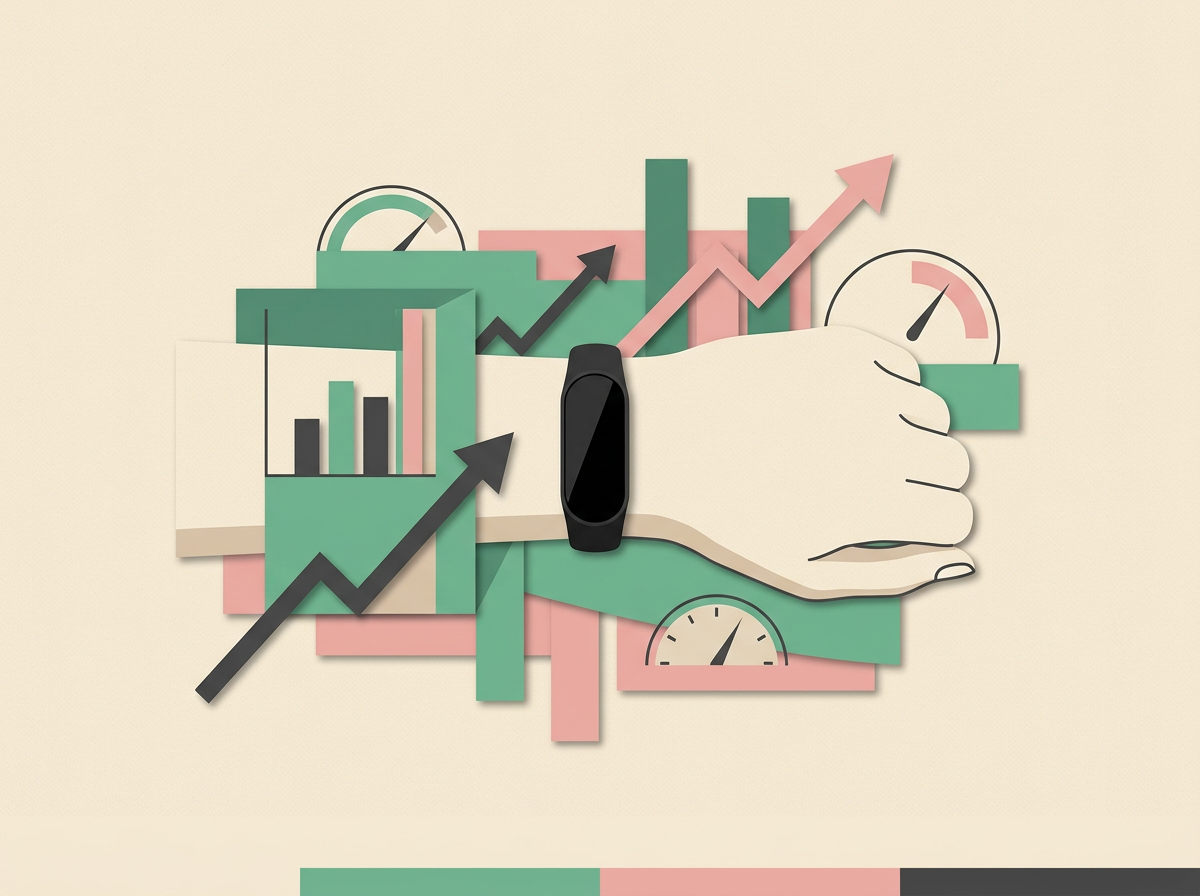
a sleek black wellness band on a wrist
The implications are profound. In theory, you could see the physiological impact of a stressful meeting in real-time or quantify the calming effect of a walk in the park. It's the ultimate bio-feedback loop. However, it also opens a Pandora's box of potential health anxiety. Will we become obsessed with flattening our cortisol curve? Can this data be misinterpreted, leading to more stress about being stressed? The product is a technological marvel, but its psychological impact remains to be seen.
- Verdict: A bold, potentially game-changing leap in personalized health data that might be more than most people need, or want.
- For: Data-driven executives, elite athletes, biohackers, and the chronically stressed who want to connect feelings to figures.
- Price Band: Estimated at €450-€550.
The Drop: Satisfy x HAY 'Stillness' Collection
When a hardcore running brand known for its obsessive technical details (like 'Justice' fabric and built-in key pouches) collaborates with a paragon of Scandinavian furniture design, the result is bound to be interesting. The Satisfy x HAY 'Stillness' collection is just that. It's activewear that subtracts rather than adds. Logos are nearly invisible, rendered in a tone-on-tone stitch. The palette is pulled from Nordic landscapes: chalk, slate, moss, and pale sky. The cuts are relaxed but precise.
A standout piece is the 'Cloud Merino' long-sleeve, designed for a pre-run warm-up or post-yoga cooldown. It feels impossibly soft but wicks moisture effectively. The shorts feature Satisfy's signature phone pocket and a single, subtle HAY colour-block tag. This isn't gear for setting a personal best; it's gear for finding a rhythm. It perfectly captures the zeitgeist of 'quiet performance'—the desire for technical function without the aggressive, fluorescent aesthetic that has dominated sportswear for decades.
- Verdict: An achingly cool, exquisitely made collection for those who believe their workout gear should be as thoughtfully designed as their living room.
- For: Design-conscious runners, architects who do yoga, and anyone who's ever wished their running shorts looked less like running shorts.
- Price Band: Prohibitively expensive for most, with shorts around €180 and tops exceeding €220.
Performance gear used to scream its function from across the street. Now, the most advanced kit simply whispers.
What this means for you
These seemingly disparate signals—a research report, a wearable, an apparel line—point toward a more nuanced and personalized future for wellness. The one-size-fits-all approach is fading. The macro trend is clear: we are all trying to find our own personal equilibrium in a world of constant stimulation. The question is what tools and methods will actually help you get there. For one person, quantifying their stress with an Aura band might provide the insights needed to make meaningful change. For another, the very idea of another data stream is exhausting, and the solution lies in finding a completely analogue practice.
The challenge is no longer a lack of options, but a surplus of them. Navigating this landscape requires a degree of self-awareness. Do you need more data or less? Do you need a community to motivate you or a sanctuary for quiet reflection? Answering these questions is the first step. If you're struggling to parse the signals, our intake quiz is designed to help you find a starting point, connecting you with verified coaches or studios that align with your actual needs, not just the latest trend. And as more thoughtful products emerge, you can trust our curation on the /products page to cut through the noise.
Verdict
This week's developments reveal an industry becoming more self-aware. Wellness is finally grappling with its own internal contradictions, acknowledging the burnout it sometimes contributes to. The emergence of the 'Disconnection Economy' alongside ever-more-sensitive trackers isn't a conflict, but a sign of maturation. It reflects a world where the path to well-being is no longer a single, upward climb, but a deeply personal search for balance. The future is not about doing more, but about doing what is right for you.
FAQ
What is the 'Disconnection Economy'?
It's a term coined by the Global Wellness Institute for the growing market of products and services that help people reduce digital engagement. This includes everything from digital detox retreats and silent spas to apps that limit screen time.
Is real-time cortisol tracking in wearables accurate?
As of mid-2026, it is an emerging technology. While promising, the accuracy and real-world utility of non-invasive, continuous cortisol monitoring in consumer devices are still being validated. It represents the frontier of personal health data.
How can I find wellness options that are less focused on technology?
Focus on analogue practices like meditation, breathwork, or time in nature. The Codex intake quiz can help match you with vetted coaches or studios that emphasize mindfulness and presence over metrics and data tracking.
Is expensive 'quiet performance' gear worth it?
It depends on your priorities and budget. For some, the combination of high-quality technical fabrics and minimalist design enhances their practice and fits their lifestyle. However, effective wellness does not require premium products.