The corner of the office where we vet new products has a certain archaeological quality. It’s a series of layers, a sedimentary deposit of consumer hope. At the bottom, you’ll find the fossilised remains of forgotten vibration plates and red-light masks from 2024. Higher up, a stratum of mushroom-based coffee substitutes gives way to the current topsoil: a jumble of sleek wearable-tech boxes, minimalist supplement jars, and a single, rather beautiful kettlebell that costs more than a monthly gym membership.
This is the front line of curation. For every product, coach, or studio that makes it onto the Codex platform, dozens are quietly assessed and, more often than not, rejected. Our job is not to chase novelty for its own sake, but to apply a filter of considered skepticism to an industry that runs on breathless promises. It’s a process of unboxing, testing, tasting, lifting, visiting, and, most importantly, asking difficult questions.
What's happening
Curation at Codex is a verb. It’s an active, continuous process that extends from our London headquarters to studios in Lisbon and coach interviews over video calls from Sydney. When a new product arrives, it isn’t just photographed for an unboxing reel. It’s assigned to a team member for a minimum 30-day trial. It lives in their home, on their body, or in their gym bag. We track its performance, its user interface, its durability, and, crucially, whether its claims hold up to real-world use.
For coaches and studios, the process is even more rigorous. Our taxonomy of trust—crawled, claimed, and verified—provides the framework. A ‘crawled’ coach is one our system has identified from public data. When they ‘claim’ their profile, they begin to add their own information. But to become ‘verified’ is to enter a dialogue with us. It involves credential checks, a review of their programming, and a one-on-one interview to understand their philosophy. We want to know not just what they teach, but why and how.
This month's cohort of test subjects is a telling snapshot of the wellness landscape in late 2026. It's a landscape defined by data granularity, a return to foundational principles, and an almost fanatical demand for transparency. We're looking at devices that promise to move from tracking to prediction, supplements that stake their reputation on lab reports, and studios that are quietly rebelling against the high-intensity-everything dogma.
Why it matters now
The global wellness economy, according to the Global Wellness Institute, is a multi-trillion-dollar behemoth. It's an ocean of choice so vast it can feel paralysing. The paradox of modern wellness is that the sheer volume of available solutions has become part of the problem. A glut of information, often contradictory and algorithmically amplified, creates analysis paralysis for even the most well-intentioned consumer. Do you need a Whoop, an Oura, or a Garmin? Is collagen a miracle powder or expensive dust? Should your workout be a lung-searing HIIT session or a quiet hour of mobility work?
This is why a trusted, human-led filter matters more than ever. Curation is no longer a luxury feature; it’s a core utility. It's the essential service of separating the signal from the noise. Our internal vetting process is the engine of that service. By doing the homework—reading the clinical studies, interrogating the supply chains, and showing up for the 6 a.m. class—we aim to provide clarity, not just more options. It’s about building a marketplace where every choice has already been carefully considered.
The wellness industry doesn't need more products; it needs a better-calibrated filter for the ones we already have.
The Picks
Here’s a look at a few of the people, products, and ideas currently under the microscope at Codex.
The Device: Oura Ring Gen 4
The fourth generation of the Finnish sleep-and-recovery tracker arrived with less fanfare than its predecessors, a sign of a maturing product category. The form factor is virtually unchanged—still a sleek, screenless band—but the magic is in the new sensor suite. Oura is making a bold play for the holy grail of consumer wearables: non-invasive glucose trend monitoring. It’s not a medical-grade replacement for a CGM, but it aims to provide directional data on how your meals and activities impact your blood sugar. It also introduces a ‘Stress Prediction’ feature, which purports to use heart rate variability (HRV) and body temperature trends to flag periods of high anticipated physiological stress.
Verdict: The gold standard for passive tracking gets smarter, but the new predictive features are still in their beta infancy and require careful interpretation. For: The data-obsessed, anyone serious about metabolic health, and those looking to understand the 'why' behind their energy levels. Price Band: €350–550, plus monthly subscription.
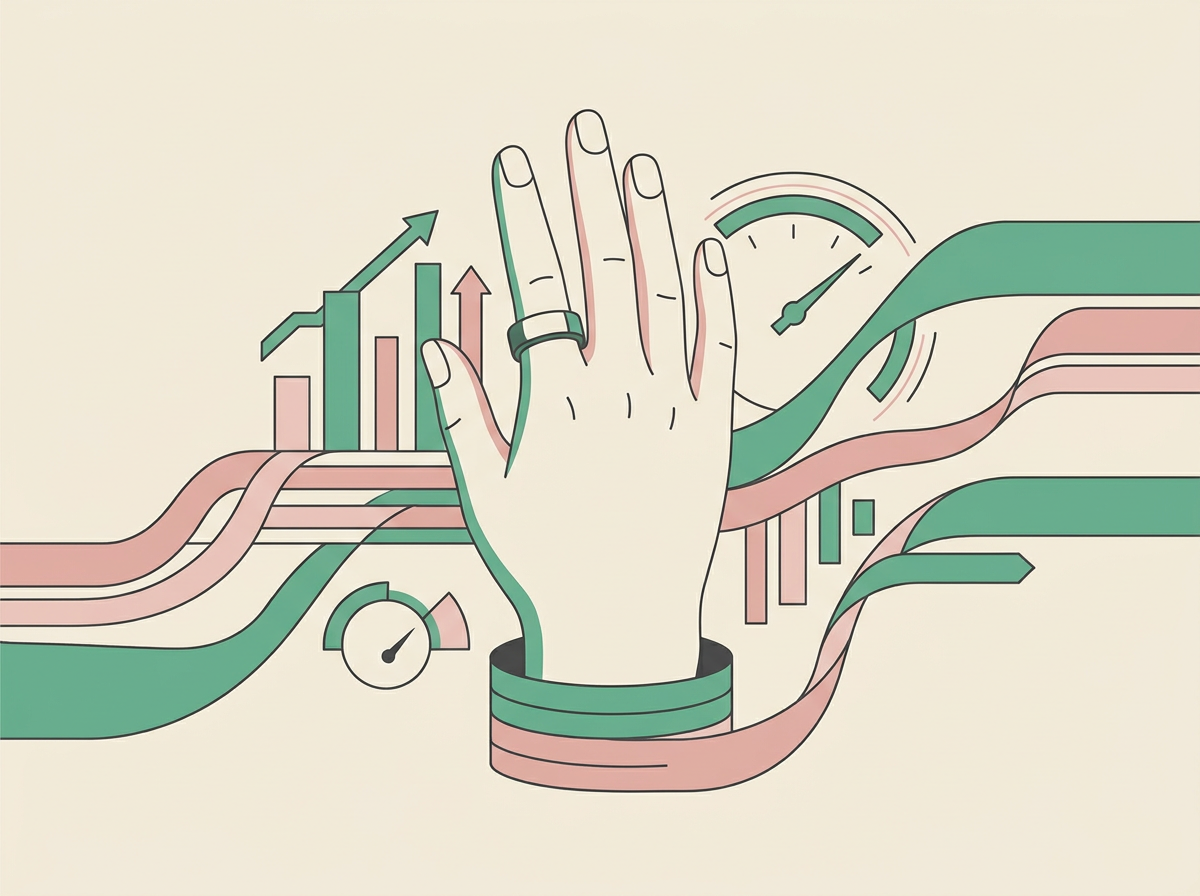
a hand wearing the sleek Oura Ring Gen 4
The Supplement: Fount Bioactive Collagen
The supplement space is notoriously difficult to navigate. Fount, a new direct-to-consumer brand, is trying to build its name on radical transparency. Their bioactive collagen peptides come with a QR code on the tub that links directly to a third-party lab report for that specific batch, showing testing for heavy metals, contaminants, and amino acid profile. They use a specific, patented peptide blend (hydrolyzed types I and III) that has been the subject of several peer-reviewed studies on joint and skin health. It’s an unflavoured powder that dissolves easily, a small but crucial detail for daily compliance.
Verdict: A clean, effective, and impressively transparent collagen that justifies its premium price through verification. For: Athletes in recovery, individuals over 30 focused on joint and skin longevity, and anyone tired of opaque supplement labels. Price Band: €40–60 per 30-day supply.
The Studio: ‘Tensegrity’ in Berlin
We sent one of our Berlin-based curators to a small, unassuming studio in Mitte called Tensegrity. The name, a portmanteau of 'tensional integrity', hints at its philosophy. This is the antithesis of a high-volume, beat-driven fitness class. The space is sparse, the classes are capped at six people, and the focus is on slow, controlled movements drawn from functional range conditioning (FRC), pilates, and dynamic neuromuscular stabilization (DNS). The goal isn't to burn calories; it's to improve the usable range of motion in your joints and build a more resilient physical structure. Coaches here don't yell affirmations; they provide quiet, precise tactile cues. It’s a place that feels more like a human body laboratory than a gym, and it represents a growing movement towards pre-hab as the new workout. Studios like this are often hunting for top-tier instructors, which is precisely why our /talent portal exists—to connect discerning studios with vetted, anonymous coaches.
Verdict: A challenging, cerebral approach to fitness that builds a foundation for all other physical pursuits. For: The desk-bound professional with tight hips, the aging athlete, and anyone who intuits that mobility is the key to longevity. How to book: Via direct inquiry or, soon, through select city-based packages on Codex.
The Methodology: Applied Breathwork Protocols
Breathwork is finally graduating from a wellness-app curiosity to a serious performance tool. We're seeing our highest-rated coaches move beyond a simple 'box breathing' instruction. They are now integrating specific protocols into training with clear objectives. This isn't just about calming down; it's about targeted nervous system regulation.
We’re seeing the ‘physiological sigh’ (a double inhale followed by a long exhale) being programmed pre-lift to down-regulate anxiety. We're seeing ‘coherent breathing’ (rhythmic five-second inhales and exhales) prescribed for recovery between sets. Some endurance coaches are even experimenting with nasal-only breathing during lower-intensity sessions to improve CO2 tolerance. The chart below, based on an internal survey of our verified coaches, shows this growing adoption of more nuanced techniques.
A wearable can track your stress, but it takes a skilled coach to teach you how to manage it.
What this means for you
This peek behind the curtain isn't just an exercise in industry naval-gazing. It's a demonstration of the framework we apply to make wellness simpler and more effective for you. The endless scroll of products, trends, and gurus is exhausting. Our goal is to do the legwork, so you can focus on the one thing that matters: finding what works for your body, your goals, and your life.
If you're feeling overwhelmed by the sheer number of choices, the Codex Intake is the perfect starting point. It’s a smart, conversational AI that listens to your needs and returns a single, tailored recommendation—be it a product, a studio, or a coach. For those ready to go deeper, you can browse our full roster of verified coaches or explore the best studios in your area. And for comparative deep dives on the products we test, our /vs/reviews section breaks down the pros and cons in detail.
Verdict
Ultimately, the best wellness tools are the ones that are effective, safe, and seamlessly integrated into your life. Our vetting process is a rigorous, ongoing effort to identify them. From a ring that predicts stress to a coach who can teach you how to breathe through it, our work is to build a platform of trust, one careful decision at a time.
FAQ
How does Codex vet products?
It's a multi-stage process involving deep research, hands-on testing by our team for at least 30 days, and cross-referencing against user data and expert opinions. Only products that prove effective and align with our standards are approved.
What is a 'verified' coach?
A verified coach has passed a manual review by the Codex team, including a background check, credential verification, and a one-on-one interview to confirm their expertise, insurance, and coaching philosophy.
Are the products featured here available on Codex?
Some may be in the final stages of vetting. Once a product passes our standards, it becomes available in our curated /products marketplace. This article is a look into that ongoing process.
Why focus on a niche studio in Berlin?
We highlight studios that represent emerging global trends. 'Tensegrity' exemplifies a shift towards foundational mobility and longevity, a methodology we see gaining traction as a vital complement to traditional strength and cardio training.