The quiet hum of mid-summer has a tendency to lull us into a state of stasis. The ambitious resolutions of January feel like a distant memory, and the year-end push is still a comfortable horizon away. Yet, in the world of wellness, there is no off-season. The churn is perpetual, a relentless cycle of launches, rebrands, and revelations, all promising a slightly better version of you.
This week is no exception. A subtle but significant shift is palpable, surfacing not in one seismic event, but across three distinct corners of the industry: the operating system on your phone, the water in the local swimming pool, and the fine print on a bottle of supplements. The common thread is a maturing of the market, a move away from wild, unsubstantiated claims and towards a future defined by integration, evidence, and accountability.
What's happening
First, in a move that sent ripples through Silicon Valley and the digital wellness space, monolithic tech firm Luminary rolled out its latest operating system update, which includes a native, deeply integrated 'Focus Suite'. Bypassing the already crowded app store, this feature links a user's calendar, biometric data from their watch (HRV, sleep quality, activity levels), and even ambient noise data from their microphone. Its purpose: to proactively suggest 'deep work' windows, mandate break times, and dynamically adjust notification settings based on calculated cognitive load. It’s the apotheosis of quantified self, moving from passive tracking to active intervention, straight from the digital mothership.
Simultaneously, the fitness world is abuzz with the rapid expansion of 'Hydro-Strength,' a modality that blends traditional resistance training with the low-impact environment of water. While aquatic fitness is nothing new, this refined version—incorporating specialised, neutrally buoyant kettlebells, resistance jets, and sensor-based performance tracking—is being rapidly adopted by high-end club chains. After a handful of influential athletes credited Hydro-Strength for their speedy recoveries, what was once a niche rehabilitation technique is now being marketed as the next frontier in functional fitness for the masses.
Finally, and perhaps most consequentially, the European Medicines Agency (EMA), in conjunction with the European Food Safety Authority (EFSA), announced its 'Nootropic and Adaptogen Transparency Directive'. Effective January 2027, the directive imposes stringent new rules on the marketing and labelling of cognitive enhancers and stress-modulating supplements. Brands will be required to provide third-party validation for the purity and potency of active ingredients, cite specific research to support their claims, and clearly disclose the origin of all raw botanical materials. It’s a regulatory shot across the bow to an industry that has long thrived in a grey area of 'proprietary blends' and vague promises.
Why it matters now
These developments aren't happening in a vacuum. They are direct responses to major currents shaping the $5.6 trillion global wellness economy. The launch of Luminary's Focus Suite is a clear play for the burgeoning wellness technology market, which the Global Wellness Institute (GWI) projects will continue its double-digit annual growth. As consumers become more accustomed to data-driven health insights from wearables, tech giants see an opportunity to become the central nervous system for personal well-being, moving beyond hardware to become indispensable life-optimisation platforms. The risk, of course, is the further erosion of boundaries between personal autonomy and algorithmic direction.
Meanwhile, the rise of Hydro-Strength speaks to a critical demographic shift. The American College of Sports Medicine (ACSM) has consistently highlighted the need for exercise solutions that cater to an aging but increasingly active population. Low-impact modalities that still deliver significant strength and cardiovascular benefits are no longer a medical niche; they are a mainstream demand. This trend caters not only to older adults but also to younger, fitness-savvy individuals seeking longevity, sustainability in their training, and an antidote to the high-impact burnout culture promoted by trends like CrossFit and Hyrox in the previous decade.
Wellness used to be an escape from the screen; now, the screen is an escape into an ever more optimised wellness.
The Edit
The landscape is shifting, and with it, the tools and techniques available to us. This week's edit zeroes in on these three key developments, examining what they are, who they're for, and what they signify for the future of personal health.
The Platform: Luminary's 'Focus Suite'
At its core, the Focus Suite is an ambitious attempt to solve modern knowledge-worker burnout with more technology. By synthesising data you’re already generating—meetings in your calendar, your heart rate variability, how much you slept—it creates a 'Readiness Score' for cognitive tasks. If your score is high, it might suggest you tackle a complex project and will automatically silence notifications from non-essential apps. If your score is low, it might flash a notification suggesting a five-minute walk or a meditation session, locking your work apps for the duration. It represents the next logical step in bio-integration, for better or worse.
- Verdict: A potentially powerful tool for the hyper-optimised, but an encroaching digital nuisance for those already feeling surveilled by their devices.
- For: The data-obsessed executive, the productivity hacker, and anyone who believes the solution to too much screen time is a smarter screen.
- Price: Free (with the cost of your data and autonomy) with the latest Luminary OS update.
The Modality: Hydro-Strength
Forget gentle water aerobics. Hydro-Strength sessions are structured like a high-intensity circuit class. A typical class might involve swings with specially designed water-fillable kettlebells, battle rope waves against the drag of the water, and sprints against powerful resistance jets. The water’s buoyancy protects joints from impact, making it accessible to a wide range of fitness levels and body types, while its density provides 360-degree resistance that engages stabiliser muscles often neglected on land. Studios are beginning to invest heavily, outfitting pools with underwater lighting systems and performance metrics displays.
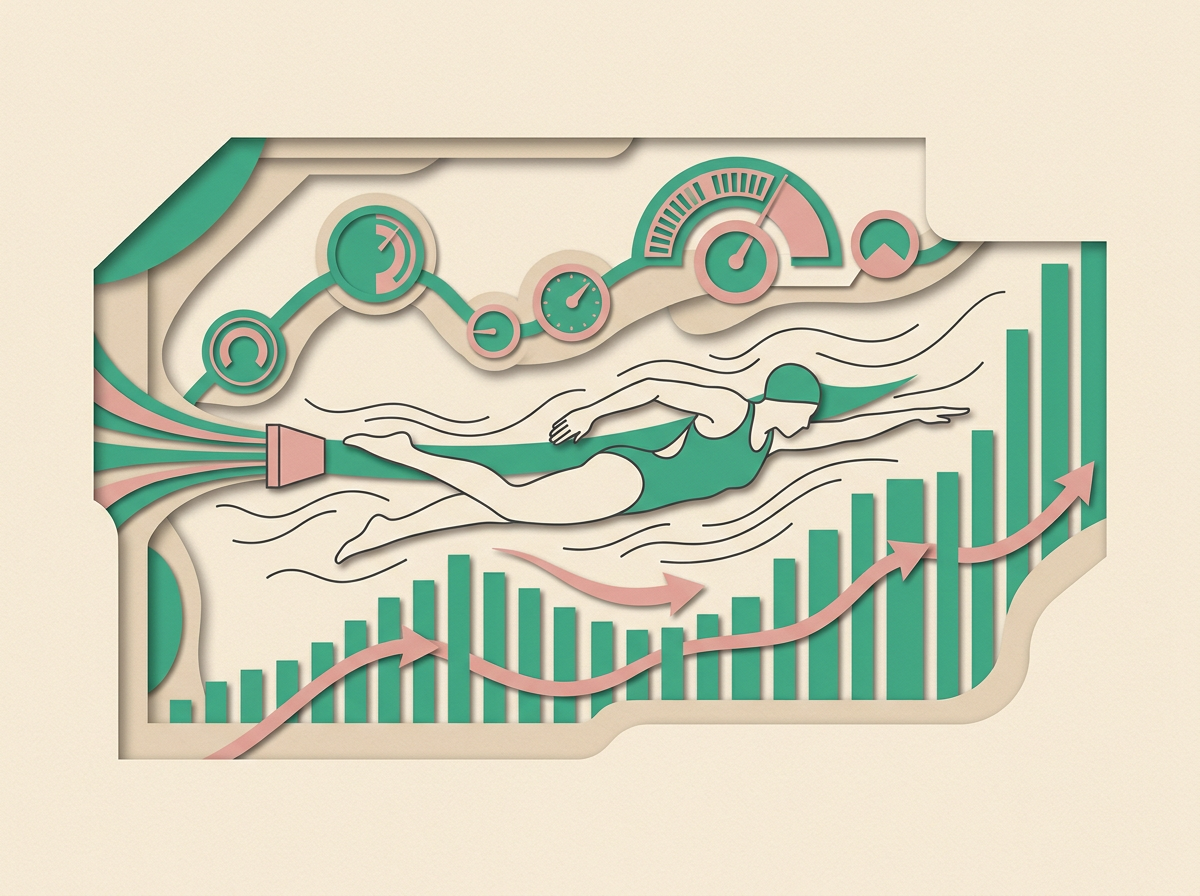
underwater view of athlete using resistance jet
- Verdict: A genuinely innovative and effective full-body workout that challenges the notion that low-impact means low-intensity.
- For: Elite athletes in recovery, individuals with joint pain, pregnant or postpartum women, and anyone looking for a challenging workout that won't leave them feeling broken.
- Booking: Find pioneering studios in your city via our curated listings.
The Mandate: EMA's Nootropic Directive
The new EMA directive is all about accountability. For years, the nootropics and adaptogens market has been a gold rush, with slick branding often standing in for clinical evidence. This new legislation forces a sector-wide 'proof of work'. A brand can no longer simply claim its 'Zen Blend' reduces stress; it must specify the exact dosage of L-Theanine and Ashwagandha, provide certificates of analysis for purity, and be able to point to peer-reviewed studies that support the claim for that specific dosage. This will undoubtedly shutter many smaller, less rigorous players but will ultimately empower consumers and reward the brands that have been investing in science and transparency all along.
- Verdict: A long-overdue market correction that will make the supplement aisle safer and more effective for everyone.
- For: The discerning consumer who wants to know that what's on the label is what's in the bottle, and that it actually works.
- Impact: Expect to see fewer, better options on shelves and a flight to quality. Codex is already updating its vetting process for
/productsto align with these higher standards.
In an industry saturated with claims, the most valuable commodity isn't a new supplement, but verifiable, transparent trust.
What this means for you
Navigating these cross-currents can be disorienting. A phone that tells you when to work, a workout that feels both futuristic and primal, and a supplement label that now reads like a scientific paper—it's a lot to process. The overarching theme is a demand for greater efficacy and personalisation. The danger is that the sheer volume of data and choice can lead to paralysis, or worse, a constant, low-grade anxiety that you aren't doing enough to optimise your existence.
This is where the human element remains irreplaceable. While an algorithm can track your HRV, it can't understand the nuance of your life or help you define what 'well-being' even means to you. That's the work you do with a coach. If the idea of Hydro-Strength sounds intriguing, but you're unsure where to start, the Codex intake is designed to match you with vetted studios and professionals who can guide you. The industry will continue to generate noise; our job is to help you find the signal.
Verdict
This week's edit shows an industry grappling with its own success. As wellness becomes more integrated into our technology, our fitness routines, and our medicine cabinets, the demand for proof is growing louder. The future isn't just about finding the next big thing, but about finding the trustworthy, effective, and truly personal things that will stand the test of time.
FAQ
What is 'Hydro-Strength' fitness?
Hydro-Strength is a high-intensity, low-impact workout method that uses the resistance of water for strength training. It incorporates specialised equipment like water-fillable kettlebells and resistance jets, making it a challenging full-body workout that is easy on the joints.
Are OS-level wellness features from companies like Luminary actually helpful?
They can be helpful for users who thrive on data and structured productivity. However, they can also feel intrusive, blurring the lines between helpful guidance and algorithmic control, which may increase digital fatigue for some individuals.
What do the new EU supplement regulations mean for me as a consumer?
They mean greater safety and trust. Brands will have to prove their products are pure, potent, and that their marketing claims are backed by scientific evidence. This will make it easier for you to choose effective supplements and avoid products with misleading labels.
With so many new trends, how can I find what's right for me?
Start by defining your personal goals, then seek trusted guidance. A platform like the Codex intake can help cut through the noise by matching you with vetted coaches, studios, and products that align with your specific needs, rather than having you chase every new trend.