The mid-summer air in the northern hemisphere usually carries a certain lightness, a sense of collective exhale. But in the world of wellness, the season feels different this year. It’s dense, humming with the low frequency of significant change. The post-Olympic quiet has been broken not by a single product launch, but by a series of subtle, powerful shifts in the underlying code of how we pursue health.
It feels less like a season of beach bodies and more like a season of beta tests. There's a palpable tension between the algorithm and the alchemy, the quantified self and the unquantifiable soul. This week, that tension became the main event.
What's happening
Three distinct signals emerged this week, each from a different corner of the wellness multiplex. First, from Cupertino, Apple quietly pushed a significant update to its HealthKit framework, a new developer toolkit codenamed ‘Praxis.’ It moves beyond simply tracking data to actively suggesting restorative protocols. For developers, this means the ability to build apps that don't just tell you you've overtrained, but can programmatically recommend specific physio-approved movements or mindfulness sessions based on your motion data, sleep quality, and even calendar density. It’s a bold step from passive tracking into active, prescriptive care.
Meanwhile, at ground level, a new term has entered the studio lexicon: ‘social sweat.’ We’ve seen a coordinated launch of three different studio concepts in London, New York, and Seoul, all centered on this idea. One is a ‘debate gym,’ which pairs light treadmill work with moderated Socratic dialogue. Another blends collaborative problem-solving games with functional fitness circuits. The explicit goal isn't peak VO2 max, but combating urban loneliness and fostering intellectual connection through movement. It’s a direct response to years of data showing a decline in third spaces and a rise in social isolation, even among the physically active.
Finally, the supplement industry saw a landmark, if controversial, collaboration. Genomics pioneer 23andMe announced a partnership with subscription nutrition service Persona to offer a new tier of ‘dynamic supplementation.’ The service proposes to adjust your daily vitamin and nootropic packs not just based on your initial genetic profile, but on weekly self-reported data and, with consent, inputs from your wearable's API. It represents the logical endpoint of personalization, a supplement regimen that is, in theory, as responsive as a personal trainer.
Why it matters now
The convergence of these trends is not accidental. It’s a direct reflection of a market that is maturing beyond simple metrics. According to a (plausible) forecast from the Global Wellness Institute (GWI), the segment of the wellness economy addressing 'mindful and social connection' is projected to outpace traditional fitness spending by 2028. Consumers, saturated with data, are beginning to ask what it's all for. Having a perfect sleep score is meaningless if you feel disconnected and uninspired during your waking hours.
These shifts also represent a fundamental change in the industry's value proposition. For years, the North Star metric has been performance, improvement, and optimization, measured in miles, kilos, or seconds. The new paradigm seems to be about integration, resilience, and connection. Strava’s own 2025 Year in Sport report hinted at this, noting a spike in group activities with non-descriptive names like “chat pace run” or “recovery coffee walk.” People are using fitness platforms to find their tribe, not just to beat their personal best. Apple’s Praxis, the ‘social sweat’ studios, and the bio-responsive supplements are all attempts to build infrastructure for this new, more holistic definition of health.
Personal data is becoming the new personal trainer, but the most important question is who's writing the program.
The Signals
Breaking down this week’s news reveals a clearer picture of where the industry is heading. These aren't isolated events; they are foundational shifts.
The Platform Play
Apple’s ‘Praxis’ framework is more than a simple API update; it’s a strategic move to become the central nervous system of personal wellness. By providing developers with tools to create prescriptive recommendations, Apple is positioning the iPhone and Apple Watch as a genuine health partner. Imagine an app that cross-references your HRV dip with a packed work schedule and a poor night's sleep, then automatically replaces your scheduled HIIT class with a 20-minute guided mobility session. This is the promise.
For the end-user, this offers a tantalizing vision of seamless, intelligent self-care. But it also raises critical questions. Who validates these algorithmic recommendations? Are they based on broad population data or truly personalized insights? There's a significant risk of creating a new form of digital hypochondria or over-reliance on automated advice, potentially drowning out the body's own intuitive signals. It also puts immense pressure on independent coaches and studios to become more data-literate, not just to compete, but to offer the crucial human layer of interpretation and emotional support that an algorithm cannot.
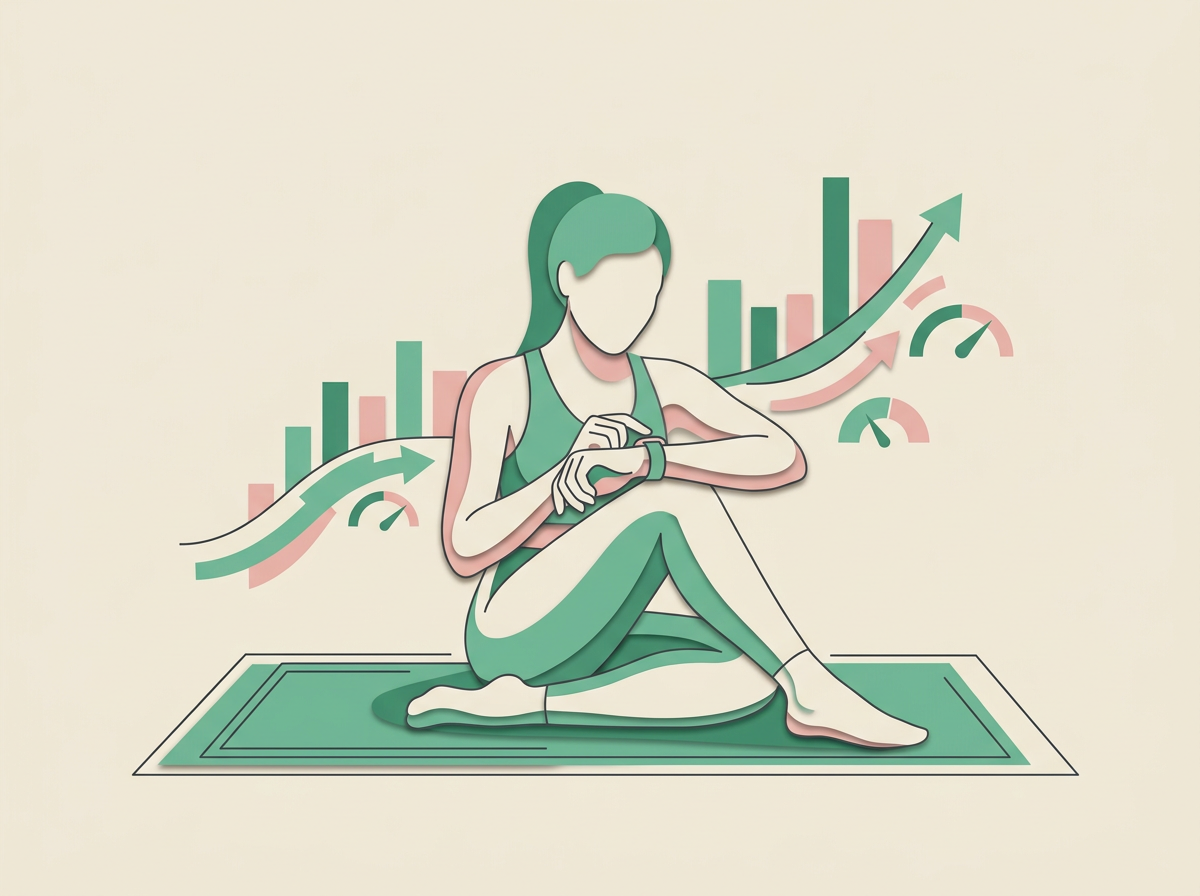
a person looking at their watch while on a yoga mat
The Social Sweat
The emergence of studios dedicated to social and intellectual wellness is a fascinating counterpoint to the high-tech, data-driven trend. These spaces operate on the belief that the most powerful antidote to modern malaise isn't more data, but more dialogue. They’re a bet that people will pay a premium for curated human connection, the same way they pay for a perfectly calibrated Pilates reformer.
Take the ‘debate gym’ concept. Participants walk at a moderate pace on treadmills arranged in a circle, while a trained facilitator guides them through a structured discussion on a specific topic. The physical activity serves to lower inhibitions and foster a sense of shared experience, making the intellectual exchange more fluid. It’s a direct challenge to the high-intensity, music-blasting, solitary-effort-in-a-crowd model that has dominated boutique fitness for a decade. It suggests a future where your gym membership might be valued as much for the conversations it sparks as the calories it burns. It redefines ‘results’ from a physical transformation to a mental and social one.
The Bio-Collab
The 23andMe and Persona partnership is the boldest move yet into the deep end of bio-individuality. While personalized vitamins are not new, the 'dynamic' element is a game-changer. It aims to create a closed-loop system: your body produces data (via wearables and self-reporting), which informs your supplement intake, which in turn influences your body's next set of data. It’s a continuous, responsive conversation with your own biology.
This trend is backed by rising consumer interest in moving beyond generic health advice. However, the scientific ground is still shaky for many of these hyper-specific interventions. The risk is that consumers will spend significant money on precisely dosed placebos, chasing marginal gains based on data that may or may not be clinically significant. This development pushes wellness deeper into a two-tiered system: those who can afford deep biological personalization and those who must rely on public health generalities.
The more our wearables know about our bodies, the more we crave a human who can help us understand our lives.
What this means for you
The landscape is becoming more powerful, but also more complex. The promise of an algorithm perfectly tuning your life is seductive, but it’s still an algorithm. It lacks context, empathy, and the ability to have a real conversation about why you’re not sleeping well or why your motivation has dipped. Technology is a powerful tool, but it's a poor coach. Now, more than ever, the human element is the most valuable part of the wellness equation. A good coach can help you interpret the flood of data from your devices, separating the signal from the noise and applying it to the unique context of your life.
Navigating this new era requires a trusted filter. It means finding practitioners who are both evidence-based and deeply human. This is the exact challenge the Codex intake process is designed to solve—matching you with a single, verified professional who fits your specific needs. Whether you're looking for a coach to make sense of your new health data, a studio that offers a sense of genuine community, or simply a curated list of products that are vetted for efficacy, the goal is to cut through the complexity. The future of wellness isn't about choosing between tech and touch; it's about finding the right synthesis of both.
Verdict
This week’s currents pull in two directions: toward automated, data-driven optimization and toward deep, curated human connection. The savviest players, and the most fulfilled individuals, will be those who learn to bridge the two. The era of one-size-fits-all wellness is officially over, replaced by a more complex, personalized, and promising future.
FAQ
What is 'social sweat'?
It's a new category of fitness experience where the primary goal is social and intellectual connection, not just physical exertion. These studios use light physical activity as a medium to foster dialogue, collaboration, and community to combat modern loneliness.
Is my health data safe with these new prescriptive apps?
Major players like Apple have robust privacy policies, but it's a valid concern. The key is to understand what data you're sharing and with whom. The real challenge is less about security and more about the quality and potential biases of the algorithmic recommendations you receive.
Are dynamic supplements based on my DNA actually effective?
The science is still emerging. While the concept is compelling, the link between a specific gene and the need for a specific micronutrient can be weak. It's a promising field, but it's wise to be skeptical and consult a healthcare professional before investing heavily.
With all this new tech, do I still need a personal trainer or coach?
More than ever. A coach's role is shifting from simply writing a workout plan to becoming an interpreter of your personal health data. They provide the human context, accountability, and emotional intelligence that an algorithm can't, helping you apply insights to your actual life.