The pursuit of well-being can feel like navigating a hall of mirrors. Every reflection offers a slightly distorted, shinier version of yourself, promising transformation if you just buy this device, subscribe to that app, or adopt this one weird trick. The speed of the trend cycle is dizzying, and the cost of chasing it, both in time and treasure, is substantial. It’s a full-time job just to discern the signal from the noise.
At Codex, curation isn’t a marketing term; it’s an active, and sometimes skeptical, process. Before a coach, product, or studio appears on our platform, it passes through a rigorous human filter. That filter is us. This is the first of our desk-side reports, a regular dispatch from the front lines of our own internal testing and vetting. It’s a look at what we’re trying, what we’re questioning, and what has us genuinely intrigued.
What's happening
The wellness economy, valued in the trillions by the Global Wellness Institute, has a powerful engine: novelty. New data streams from wearables, new formulations in supplements, new hybrid fitness concepts. The market is saturated with solutions looking for problems, many of them draped in the language of optimization and biohacking. The promise is a shortcut to a better state of being, but the reality is often just a more expensive way to track a metric that may or may not matter.
Our job is to slow down and apply first principles. Does this thing actually work? Who is it for? Does it solve a real problem, or does it create a new one (like data anxiety or an empty wallet)? This process involves more than just reading spec sheets or marketing copy. It means lacing up the shoes, showing up for the 8 AM class, integrating the device into a daily routine, and talking to the people behind the brands.
This month, our collective testing pod has been focused on a few key areas that reflect broader shifts in the industry. We’re seeing a move away from purely aggressive, high-intensity-everything workouts toward a more balanced approach that prioritizes longevity and recovery. We're also observing a flight to quality and experience; a boutique studio can no longer get by on just a good playlist and a convenient location. Finally, technology continues to embed itself deeper into our practices, but with a new focus on passive sensing and actionable, rather than overwhelming, feedback.
Why it matters now
Consumer sophistication is at an all-time high. The post-pandemic user doesn't just want a workout; they want an integrated experience that feels both effective and authentic. According to recent reports from the IHRSA, member expectations have shifted. They demand personalization, community, and demonstrable value beyond simple access to equipment. This puts the onus on operators and manufacturers to deliver products and services that are not only well-designed but also scientifically sound and genuinely useful.
This is where rigorous, independent vetting becomes critical. The average person doesn't have the time or resources to test five different sleep trackers or visit every new studio in their city. They rely on trusted sources to do that work for them. In an ecosystem dominated by affiliate links and sponsored content, that trust is easily eroded. We see our role as that of a trusted filter, applying a consistent methodology to everything we assess, whether it's a hundred-euro sensor or a twenty-euro drop-in class. The goal is to surface the one match that respects a user's time, budget, and individuality.
The first filter for hype is simple: can this tool or practice deliver a meaningful result when no one else is watching?
The picks
Here’s a look at what has crossed our desks and earned a place in our testing rotation this month. Our assessment is ongoing, but these are the items that have cleared the initial hurdle of being genuinely interesting.
Device: Oxa Breathing Sensor
Breathwork is foundational, but it's also ephemeral and difficult to quantify without guidance. Oxa aims to solve this by pairing a small, unobtrusive sensor—worn on a chest strap or clipped to clothing—with an app that provides real-time feedback and guided exercises. It measures pulmonary, cardiac, and respiratory activity to give you a surprisingly detailed view of your autonomic nervous system's state. The idea is to make practices like box breathing or physiological sighs more effective by showing you, not just telling you, how to do them correctly.
- Verdict: A promising tool for anyone serious about managing stress or improving respiratory efficiency, but likely overkill for the casual meditator.
- Who it's for: Data-driven individuals, athletes looking for a recovery edge, or those struggling to build a consistent meditation or breathwork habit.
- Price band: €150–€200
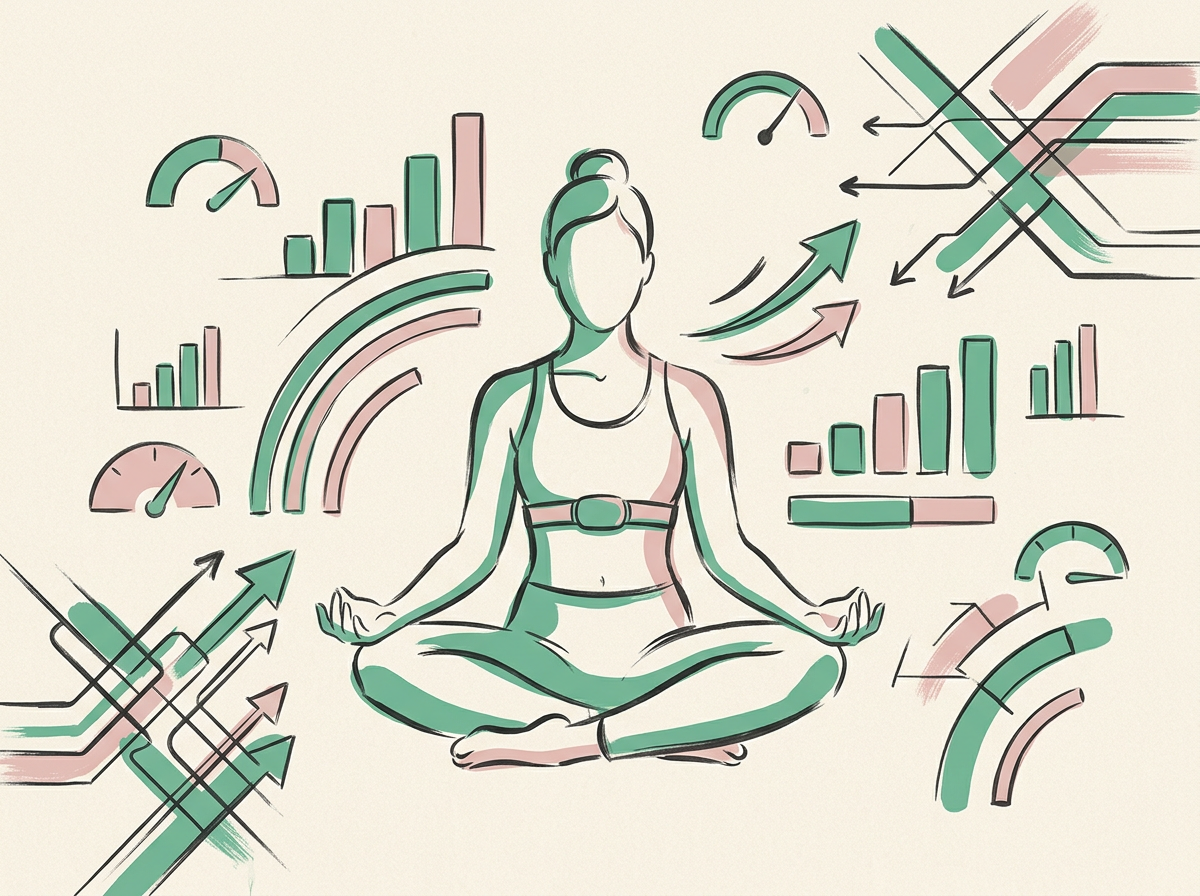
a person meditating wearing the Oxa sensor
The initial experience is impressive. The real-time feedback loop is tight; you can literally see the effect a slow exhale has on your heart rate variability (HRV). The app's guided sessions are well-produced, targeting goals from pre-sleep relaxation to pre-workout activation. Our primary question during long-term testing is whether this data remains useful over time, or if it becomes another number to obsess over. Does it empower the user to eventually internalize the practice and ditch the tech, or does it create a permanent dependency?
Apparel: Freetbarefoot
The minimalist footwear movement isn't new, but it's enjoying a renaissance as people seek to undo the damage of a lifetime spent in narrow, over-cushioned shoes. Freetbarefoot, a small company out of the UK, is our current focus in this space. Their proposition is simple: create shoes with a wide toe box, zero-drop sole (meaning your heel and forefoot are level), and flexible construction that allow your feet to function as nature intended. We've been testing the Freet Flex, a versatile model designed for walking, light hiking, and casual wear.
- Verdict: An excellent, unpretentious entry into the world of minimalist footwear that prioritizes function over fashion.
- Who it's for: People with foot pain, runners looking to improve their form, or anyone curious about strengthening their feet.
- Price band: €100–€140
The most immediate sensation is one of freedom. Your toes can splay. You can feel the texture of the ground beneath you, which provides a wealth of sensory feedback your brain has been missing. The transition requires patience; years of atrophy in the small muscles of your feet can't be reversed overnight. But for those willing to take it slow, the potential benefits—stronger arches, better balance, reduced injury risk—are compelling. Freetbarefoot stands out for its no-nonsense design and accessible price point in a category that can sometimes feel zealous and expensive.
Studio: John Reed Fitness, London
Is it a nightclub? An art gallery? A gym? John Reed Fitness, part of the Berlin-based RSG Group, intentionally blurs these lines. We visited their Liverpool Street location in London to see if the experience lives up to the aesthetic. The space is a sensory feast: neo-futurist sculptures, live DJ sets, and moody lighting create an atmosphere that feels miles away from the sterile, brightly-lit box gyms we’ve grown accustomed to.
- Programming: A huge range, from classic free weights and cardio machines to a packed schedule of classes including Pilates, boxing, and their signature 'Pump' workout. Quality can be instructor-dependent, as with any large gym.
- Vibe: Electric and energetic. This is not a place for quiet contemplation. It’s designed to be motivating through sensory immersion. The live DJ is a constant, setting a driving tempo for the whole floor.
- Who it suits: The social exerciser who is motivated by music and high-energy environments. People who want their gym to double as a 'third place' and are perhaps bored by traditional fitness settings.
- Booking: Via membership. Their model is more premium than a budget chain but more accessible than exclusive boutique studios. You can check out more unique offerings on our dedicated page for affiliated /studios.
Beneath the neon and concrete, however, is a very well-equipped gym. The range of machines from brands like Gym80 is extensive, and there's ample space for functional training. The core question is whether the club-like atmosphere enhances or distracts from the workout. For some, it will be a powerful motivator. For others, it might be sensory overload. It represents a clear bet that for a certain demographic, the 'experience' of the workout is just as important as the workout itself.
Methodology: Zone 2 Training & The Talk Test
Not a product, but a principle that’s quietly becoming the cornerstone of modern endurance programming. Popularized by physicians like Iker Lecuona and Peter Attia, Zone 2 cardio refers to low-intensity, steady-state exercise performed at a level where you can still comfortably hold a conversation. This isn't about smashing personal bests; it's about building your aerobic base by improving your mitochondrial efficiency. In simple terms, it teaches your body to become better at using fat for fuel.
The beauty of Zone 2 is its accessibility. You don’t need a lactate meter or a fancy watch, though they can help you dial it in. The 'talk test' is the simplest guide: if you can speak in full sentences without gasping for breath, you're likely in Zone 2. If you can sing, you're going too easy. If you can only manage one or two words at a time, you're pushing too hard into zones 3 and 4. The prescription is typically 3-4 sessions per week, for 45-60 minutes each.
- Verdict: A non-negotiable protocol for anyone interested in healthspan, longevity, and sustainable athletic performance.
- Who it's for: Everyone. From elite athletes building an endurance engine to deconditioned individuals looking for a safe and effective way to improve their cardiovascular health.
- Price band: Free. The only cost is your time.
Effectiveness isn't measured by the complexity of your gear, but by the consistency of your practice.
What this means for you
This cross-section of our current testing queue—a sensor, a shoe, a studio, a method—highlights a central truth: there is no single solution. Wellness is a system of interlocking parts, and what works is deeply personal. A data-rich device like the Oxa sensor might be transformative for one person and a source of anxiety for another. The vibrant energy of a John Reed studio could be motivating for you, while your training partner might thrive in the quiet focus of a solo run in minimalist shoes.
The real challenge isn't finding the 'best' product, but finding the right protocol for your unique biology, psychology, and lifestyle. This is the philosophy behind our AI-powered /intake, which moves beyond surface-level questions to understand your goals and preferences on a deeper level. Whether you're intrigued by the science of Zone 2 and need a /coaches to help build a program, or you're looking for curated tools to support your practice, the first step is understanding your own starting point. From there, you can explore the vetted /products and experiences that align with your path.
Verdict
The wellness market will continue to accelerate, fueled by technology and our innate desire for self-improvement. Our commitment is to remain a point of stillness in that storm. By doing the homework—testing, questioning, and curating—we aim to replace the chaos of endless choice with the clarity of a single, well-matched recommendation.
FAQ
What does Codex look for when vetting a product or studio?
We prioritize effectiveness, safety, quality, and value. Our process involves hands-on testing by our team, expert consultation, and evaluating the brand's scientific claims and customer service. We're asking: does it solve a real problem well?
Is Zone 2 training suitable for beginners?
Absolutely. It's one of the safest and most effective ways to build a cardiovascular base. By using the simple 'talk test' to manage your intensity, you can ensure you're getting the benefits without overexerting yourself. A certified coach can help create a personalized plan.
Do I need minimalist shoes like Freetbarefoot to have healthy feet?
Not necessarily, but they can be a powerful tool for rebuilding foot strength and natural function. The key is a slow transition and listening to your body. Even spending more time barefoot at home can be beneficial.
Are fitness trackers and sensors like Oxa worth the money?
It depends entirely on your personality and goals. If you are motivated by data and find it helps you build consistent habits, they can be a great investment. If you find the data stressful or overwhelming, the cost may outweigh the benefit.